Best Professional Chainsaw 2026: Pro-Grade Saws for All-Day Cutting
When you buy through the Amazon links on this page, we may earn a commission at no extra cost to you. Learn more
Last updated October 31, 2026
The Husqvarna 555 is the best professional chainsaw for most working cutters in 2026: its 4.16 hp X-Torque engine, AutoTune management and Air Injection filtration are built for sustained felling, limbing, bucking and firewood work, and the two-year warranty for professional use backs it. If your work happens in the tree rather than on the ground, a top-handle saw such as the Husqvarna T435 is the right tool instead.
Professional grade is a build standard, not a displacement number. A magnesium crankcase, a rebuildable top end, an adjustable oiler and a duty cycle made for full-throttle running separate a pro saw from a farm or homeowner model. Check the owner's manual for the duty cycle and service intervals of the specific machine before you buy.
The best professional chainsaws of 2026
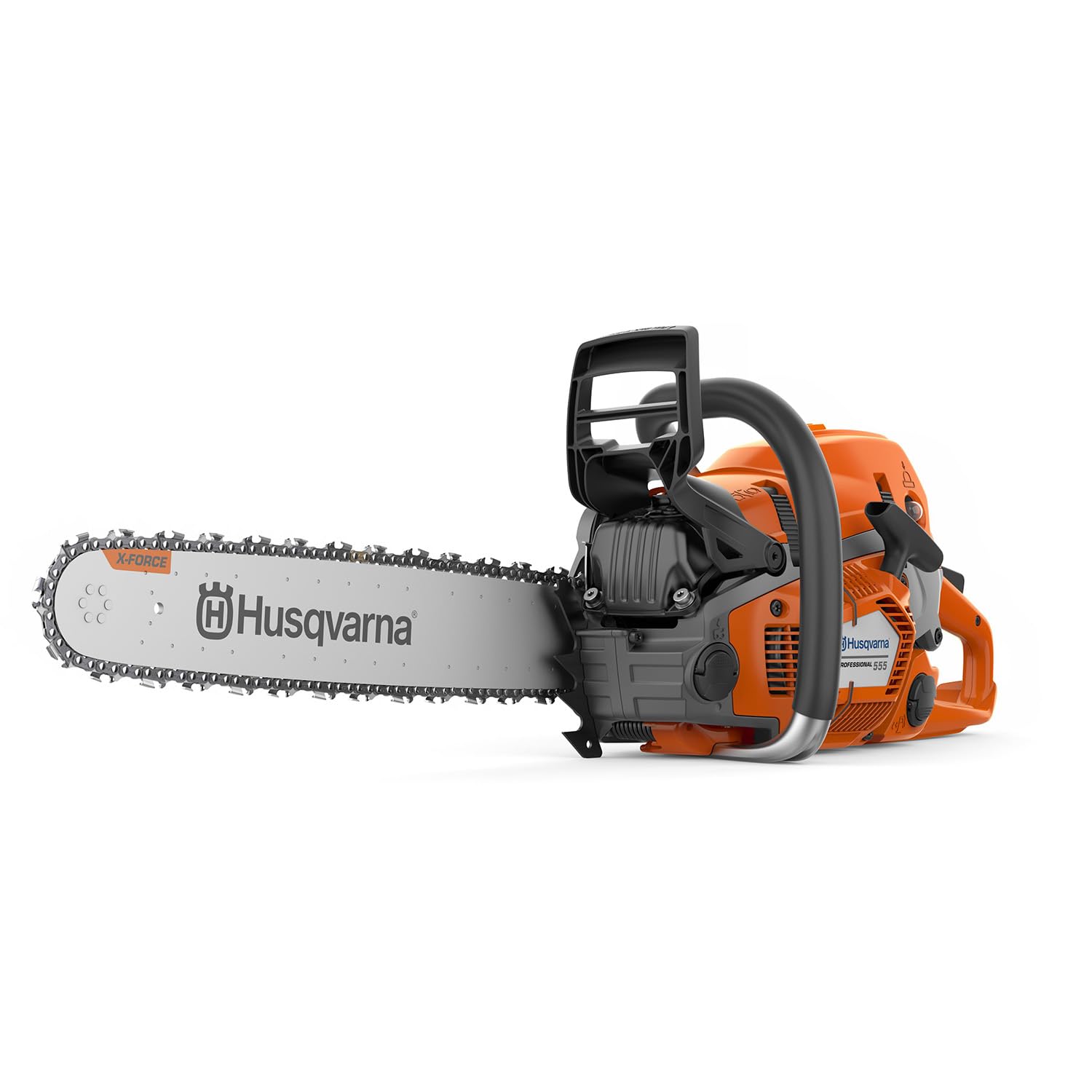
Husqvarna 555
See on Amazon
Echo CS-355T-14 chainsaw
See on Amazon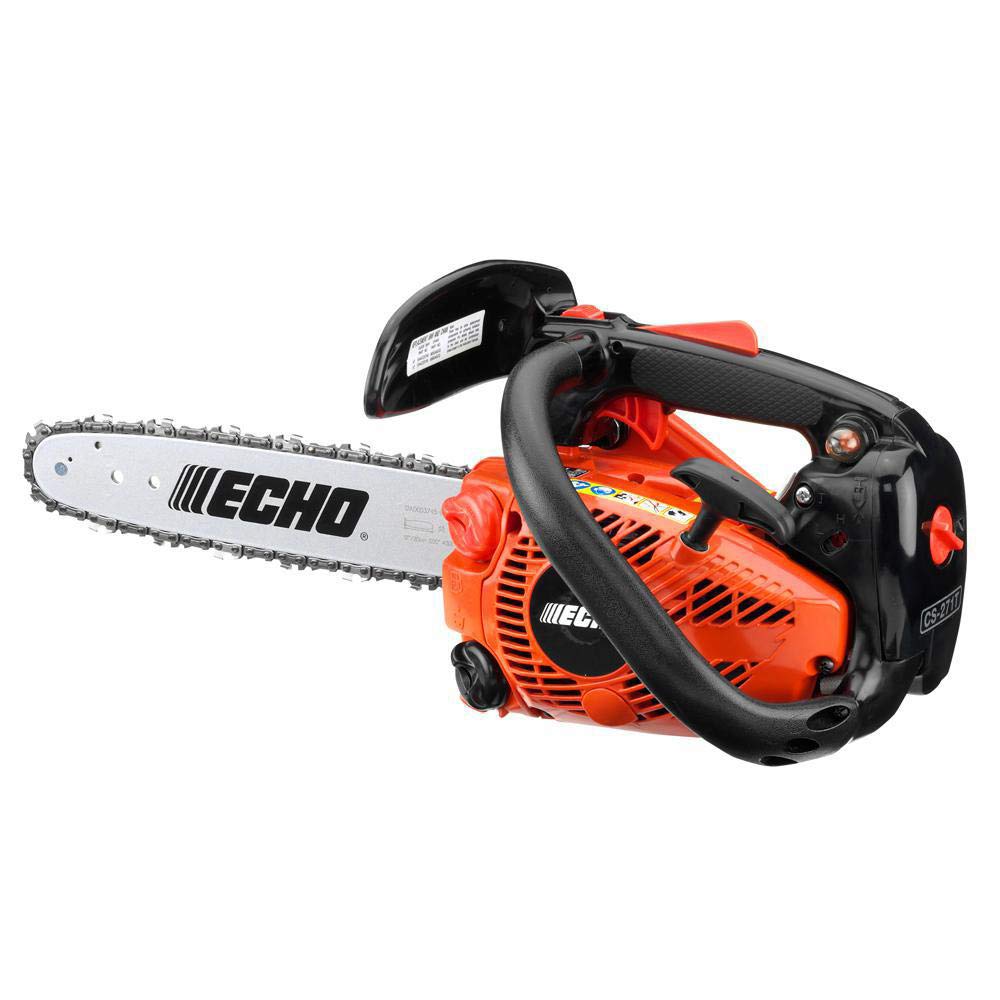
Echo CS-271T-12
See on AmazonModel comparison
| Model | Price | Rating | Power source | Bar length | Engine displacement | Best for | |
|---|---|---|---|---|---|---|---|
| | Husqvarna 555 | $799.99 as of 10/31 See on Amazon | ★ 4.2 (30+ ratings) | Gas powered | 24 in | not stated | Professional cutters felling and bucking small to midsize trees all day get a 4.16 hp X-Torq engine, AutoTune and anti-vibration in a slim body. |
| | Echo CS-355T-14 chainsaw | $495.36 as of 10/31 See on Amazon | ★ 4.5 (200+ ratings) | Gasoline | 14 in | 35.8 cc | Trained or professional climbers who specifically want a top-handle saw will find the compact 35.8CC engine built for in-tree work. |
| | Echo CS-271T-12 | $498.99 as of 10/31 See on Amazon | ★ 4.6 (350+ ratings) | Gasoline powered | 12 in | 26.9 cc | Trained arborists and off-grid cutters get a 5.3 hp gas top-handle saw with no runtime limit, accepting fuel mixing and upkeep. |
 | Husqvarna T435 chainsaw | $469.99 as of 10/31 See on Amazon | ★ 4.5 (200+ ratings) | Gas powered | not stated | 35.2 cc | Tree care professionals pruning and limbing in the canopy get a 7.5 pound top-handle saw with a 35.2 cc X-Torq engine. |
 | Husqvarna 545 Mark II chainsaw | $659.00 as of 10/31 See on Amazon | ★ 4.1 (20+ ratings) | Gas powered | 20 in | 50.1 cc | Property owners felling and bucking small to midsize trees get a 3.6 hp saw with magnesium crankcase, AutoTune and LowVib anti-vibration. |
What makes a chainsaw professional grade
Professional grade is a build and duty standard, not a single number. The clearest structural marker is the crankcase: a professional saw carries a magnesium crankcase that holds crankshaft bearing alignment under heat and survives repeated teardowns and drops. Farm, ranch and homeowner saws use polymer or aluminum-polymer construction that is not economically rebuildable. That is the line between a saw you rebuild and a saw you replace.
Engine architecture and power-to-weight
Closed-port (stratified) cylinders, separate cylinders rather than clamshell designs, and forged crankshafts are the pro-tier pattern. They deliver more output per kilogram and tolerate sustained full-throttle running. Judge a saw by output per kilogram, not by cc alone: a well-built smaller-displacement pro saw can out-power and under-weigh a larger farm or ranch saw. Displacement is chosen by the job, not by prestige.
Serviceability and fasteners
Adjustable oil pumps, captive or retained bar nuts, side-mounted chain tensioning, accessible air filters and spark plugs, and a design intended for dealer or owner rebuild all point to a pro saw. These details decide whether routine service happens in the field or in a workshop.
Duty cycle
Pro saws are built for continuous full-throttle work; consumer saws are built for intermittent use. Duty cycle is rarely published, so infer it from the build markers above: bigger cooling fins, better filtration, higher-capacity oilers and a rebuildable top end.
Chain labeling and the 62cc threshold
Chain carries an ANSI/OPEI label. Green (formerly blue) means low-kickback, compliant chain suitable for any saw; yellow means non-low-kickback, professional-use-only chain. Gas saws at or above roughly 62cc may legally ship with yellow-label chain, while smaller saws must ship with low-kickback chain. That is why displacement matters regulatorily even though it is not the quality line.
The two definitions, reconciled
The regulatory threshold and the market definition are different things. A small top-handle climbing saw is a professional saw; a large farm or ranch saw is not. Use the build standard to judge any saw, and treat displacement as a job-fit choice.
Duty cycle and heat management on all-day jobs
Sustained full-throttle running loads the cylinder and cooling fins, the clutch and drum, the bar and chain, and the oil pump. Pro saws have larger cooling fins, better filtration and higher-capacity oilers precisely because they are expected to run hot for hours.
What a realistic duty cycle looks like
Professional work is not one continuous cut; it is a cycle of cutting, repositioning, refueling, sharpening and clearing. The saw's thermal limit is reached in long uninterrupted cuts in dense hardwood, not in the average working pattern. Think in terms of sustained load blocks with recovery between them.
Pacing and cooling
Let the saw idle briefly between heavy cuts to move heat and oil. Keep the cooling fins and starter cover clear of chips and sawdust. Keep the air filter clean so the engine is not running rich and hot. Do not run a dull chain, which multiplies heat and load. Check bar-oil flow, because a dry bar and chain is a heat source as well as a wear source.
Clutch and bar wear
Continuous work wears the clutch drum and sprocket, stretches and heats the chain, and can blue a bar if oiling is marginal. Adjustable oil pumps let the operator match oil delivery to bar length and wood.
Fuel and heat
A hot saw restarted repeatedly through the day is the normal pro pattern. Refuel away from ignition sources and give the saw a moment before restart.
How pro saws are built to be serviced and rebuilt
The cylinder and piston, known as the top end, are service items on a pro saw. A scored piston or worn rings can be replaced rather than condemning the saw. This is the single biggest reason a pro saw outlives a homeowner saw.
Wear items and access
The clutch, drum and sprocket are wear items, replaceable, and the reason a pro saw's drive train is designed for access. The oil pump is adjustable and serviceable, so a failed oiler is a repairable fault, not a write-off. Magnesium crankcases hold bearing alignment through teardowns, which is what makes repeated rebuilds viable.
Fasteners and field service
Captive bar nuts, side-mounted tensioners and accessible filters and plugs are designed so routine service happens in the field, not in a workshop.
What this means for ownership
A pro saw is bought as a platform to be maintained, not a disposable unit. Weigh the availability of service parts and a competent local dealer as part of the purchase, because rebuildability only pays off if parts and labor are reachable.
Matching a pro saw to the work you actually do
Start from the cutting mix, not the spec sheet. Ask what proportion of the work is climbing and pruning, limbing, felling, bucking firewood, storm cleanup, or milling. Each mix points to a different class of saw.
Top-handle climbing saws
Small displacement, short bar, designed for in-tree use by trained and secured operators. They are professional tools, but they are not ground saws. Understand the in-tree-only restriction and the two-handed operating requirement before considering one.
Mid-size all-rounders
This class covers most professional felling, limbing and bucking of small and midsize trees, and it is the sensible first pro saw for many buyers. Bar length should be slightly longer than the diameter you cut most often, without being so long that the tip reaches the ground or catches branches.
Larger felling saws
For sustained work in big timber, where the extra displacement and longer bar earn their weight. Step up only when the work genuinely demands it, because the weight and fuel cost are paid on every cut.
Bar length logic
A saw is happiest within a bar range matched to its displacement. Over-barring a saw dulls performance and stresses the oiler; under-barring it wastes capacity. Pick the bar for the typical cut, not the biggest tree you might meet.
Weight accounting
Published weights are powerhead-only. Bar, chain and fuel add real weight. Compare ready-to-cut weight, because that is what you carry all day.
Features worth paying for by job
Heated handles for cold-season work, adjustable oilers for long bars, decompression valves on big saws, captive fasteners for field service, and anti-vibration systems. Anti-vibration is a health feature, not a comfort feature, because sustained vibration exposure causes irreversible hand and wrist injury.
Our picks by budget
The Husqvarna T435 is our budget pick because it is the lowest outlay of the three tiers and still a genuinely professional-use tool: a light top-handle saw for pruning, limbing and cutting by tree-care professionals.
The Echo CS-271T-12 is our mid-range pick because it adds a compact professional-format saw with a very short 12-inch bar for precision pruning and limbing in tight quarters, backed by Echo's commercial and consumer warranty terms.
The Husqvarna 555 is our premium pick because it is the saw here built for the broadest professional cutting mix, with the output, 24-inch chain, AutoTune management, Air Injection filtration and two-year professional warranty that sustained felling, bucking and firewood work demands.
Budget
Mid-range
High-end
Which professional chainsaw for which buyer
Top-handle saws are in-tree tools for trained, secured operators, while ground felling and bucking belong to rear-handle saws.
Tree-care professional pruning in the tree
The Husqvarna T435 is a top-handle saw intended for tree-care professionals, for pruning, limbing and cutting. At 7.5 lb it is lighter than the Husqvarna 555 and the Husqvarna 545 Mark II chainsaw.
Precision work in tight quarters
The Echo CS-271T-12 pairs a 26.9cc engine with a 12-inch bar for pruning and limbing where a longer bar would catch branches.
Climbing with a 14-inch bar
The Echo CS-355T-14 is a top-handle saw with a 35.8cc engine and a 14-inch bar, with a 1-year commercial or 5-year consumer warranty.
Felling, bucking and firewood
The Husqvarna 555 brings 4.16 hp, a 24-inch chain, AutoTune, Air Injection and a two-year warranty for professional use to sustained ground work.
Mid-size rear-handle property work
The Husqvarna 545 Mark II has a magnesium crankcase, an adjustable oiler and AutoTune for felling, limbing and bucking of small and midsize trees.
Our verdict on the best professional chainsaws
The Husqvarna 555 is the top pick because it is the saw on this page built for the broadest professional cutting mix: felling, limbing, bucking and firewood, with the engine management, filtration, anti-vibration and professional-use warranty to match. The Echo and Husqvarna top-handle saws are the right picks when the work is in the tree rather than on the ground, and the Husqvarna 545 Mark II is the mid-size rear-handle alternative with a magnesium crankcase and adjustable oiler. Choose by cutting mix and by the build standard, not by displacement alone, and confirm dealer and parts support before buying.
Detailed model analysis
A pro saw earns its place by how it holds up to a full day of cutting, not by the number on the side.
Husqvarna 555
The Husqvarna 555 is built for people who cut for a living. Its 4.16 hp X-Torque engine handles felling, limbing and bucking small and midsize trees, plus firewood and log cutting.
X-Torque is a patented engine design that keeps power up even at low rpm. That helps when the chain slows down in thick wood.
AutoTune adjusts the engine for different fuels, altitude, humidity, temperature and a clogged air filter. Air Injection spins out 98% of dust and debris before it reaches the air filter.
Smart Start eases starting. The anti-vibration system and slim body help with handling, and the side-mounted tensioner makes chain slack adjustments simple. The chain measures 24 inches.
It is gas only and not a top-handle saw. It runs on a 50:1 mix with Husqvarna 2-stroke lubricant, and only the saw comes in the box, so you supply the fuel and oil.
It suits professional cutters who fell and buck all day and want a 2-year warranty for professional use.
- Brand: Husqvarna
- Power source: Gas powered
- Power: 4.16 hp
- Bar length: 24 in
- Weight: 13 lb
- Dimensions: 18.2 in long, 8.9 in wide and 11 in high
Echo CS-355T-14 chainsaw
The Echo CS-355T-14 is a compact gas saw in a top-handle format, made for work up in the tree. It pairs a 35.8 cc engine with a 14-inch bar and chain.
At 35.8 cc it is built for in-tree work rather than big felling jobs. It runs on gasoline, with no battery or electric option, so you work from a fuel can rather than a charger.
Its 14-inch chain length matches the Husqvarna T435, which is also a top-handle saw.
The warranty is 1 year for commercial use and 5 years for consumer use. If you cut for a living, the 1-year commercial term is the one that applies to you.
Its limit is plain: the Husqvarna 555 and Husqvarna 545 Mark II add AutoTune, Smart Start and anti-vibration, which are not part of the Echo's features.
We see it suiting trained or professional climbers who want a top-handle saw with a compact engine and a commercial warranty.
- Brand: Echo
- Power source: Gasoline
- Engine displacement: 35.8 cc
- Bar length: 14 in
Echo CS-271T-12
The Echo CS-271T-12 pairs a 26.9 cc gas engine with a 12-inch bar and chain. It is a top-handle saw, built for in-tree work.
The short bar is easier to place for pruning and limb work in the tree. It is gasoline-powered, with no battery or electric option, so you can keep cutting as long as you have fuel.
Next to the Echo CS-355T-14 chainsaw, it has a shorter bar and chain and a smaller engine. The Husqvarna T435 chainsaw moves up to a 35.2 cc engine for tree care work.
AutoTune, Smart Start and an anti-vibration system are not among its features. You get a basic gas saw.
We see it suiting trained arborists and off-grid cutters who want a small, gas-powered top-handle saw for light in-tree cutting and accept a short bar.
- Brand: Echo
- Bar length: 12 in
- Engine displacement: 26.9 cc
- Power source: Gasoline powered
Husqvarna T435 chainsaw
The Husqvarna T435 chainsaw is built for tree care professionals who spend the day in the canopy. It weighs 7.5 lb, the figure to check first on a saw you hold up in a tree.
It is a mid-sized top-handle saw with a 35.2 cc X-Torq engine and 2.01 hp. X-Torq keeps power and torque up even at low rpm.
The top-handle design is easier to control and maneuver in the canopy or other confined spaces. It also means less fatigue for the operator.
A heavy-duty rope attachment point gives you a sturdy spot to fasten a rope. That makes it easy to hoist the saw into the tree.
It is gas powered with no battery or electric option. Only the saw comes in the box, so fuel and oil are on you.
AutoTune, Smart Start and an anti-vibration system are not among its features, and 2.01 hp is the main limit for heavy wood. It suits tree care professionals who prune and limb in the canopy.
- Brand: Husqvarna
- Engine displacement: 35.2 cc
- Power: 2.01 hp
- Power source: Gas powered
- Weight: 7.5 lb
- Dimensions: 21 in long, 10.5 in wide and 10 in high
Husqvarna 545 Mark II chainsaw
The Husqvarna 545 Mark II is a 20-inch gas saw for felling, limbing and bucking small and midsize trees. Its 50.1 cc, 3.6 hp 2-cycle X-Torq engine drives the work.
The build is the draw. A magnesium crankcase and forged three-piece crankshaft are the kind of parts that separate a pro saw from a lighter one.
An adjustable chain oil pump lets you set the oil flow to the work. AutoTune adjusts the engine for fuel, altitude, humidity, temperature and a clogged air filter.
LowVib anti-vibration and a slimmed-down body help reduce fatigue. Smart Start eases starting, and the side-mounted tensioner makes slack adjustments simple. It weighs 12.6 lb.
It runs on a 50:1 mix with Husqvarna 2-stroke lubricant. Warranty is 2 years, or 5 years when you buy 96 fl oz of pre-mixed fuel with the saw. Only the saw comes in the box.
We see it suiting property owners and working cutters who fell and buck small to midsize trees and want a pro-grade build.
- Brand: Husqvarna
- Bar length: 20 in
- Engine displacement: 50.1 cc
- Horsepower: 3.6 hp
- Weight: 12.6 lb
- Power source: Gas powered
Frequently asked questions
Professional saws are bought as platforms to be maintained, so parts and dealer support count as much as the spec sheet.
How long does a professional chainsaw last compared with a homeowner saw?
Expect a working life measured in many seasons of regular cutting rather than a single engine failure, because the top end, clutch, drum, sprocket and oil pump are service items with a defined replacement path. How many years you get depends on cutting volume, fuel and filter discipline, and whether parts and a competent local dealer are within reach.
What should I look for in a pro saw if I work in the tree rather than on the ground?
In-tree work calls for a top-handle saw, a professional tool built for climbing, pruning and limbing rather than ground felling. Low weight matters when you carry the saw up and hold it out while cutting, so look for a compact powerhead with a short bar. Top-handle saws are for trained, secured operators and are restricted to in-tree use with a two-handed grip, so a rear-handle saw remains the right choice for felling and bucking on the ground.
What is the difference between a farm/ranch saw and a professional chainsaw?
A farm/ranch saw is a larger-displacement consumer-architecture saw for intermittent heavy use. A professional saw is built for continuous full-throttle work and to be rebuilt rather than replaced.
Do I need a professional chainsaw for home use?
Only if your cutting volume and pattern justify it. Occasional storm cleanup and a few cords of firewood a year do not; sustained, frequent or paid cutting does.
Are top-handle chainsaws only for climbing?
A top-handle saw is restricted to in-tree work by trained, secured operators, so it should not be used for ground cutting. For ground felling and bucking, choose a rear-handle saw.
Can a professional chainsaw be rebuilt?
Yes. The top end, clutch, drum, sprocket, oil pump and bearings are all service items with a defined replacement path, and a magnesium crankcase keeps bearing alignment through repeated teardowns. Budget for the parts and for a competent local dealer, since rebuildability only pays off when both are within reach.
What should I check in the owner's manual before buying a professional saw?
Check the duty cycle and the service intervals listed for that specific machine, since duty cycle is rarely published anywhere else. The manual is also where you confirm the saw is intended for continuous full-throttle work rather than intermittent use, and where the in-tree-only restriction and two-handed operating requirement are spelled out if you are considering a top-handle saw.