Best Chainsaw for Firewood 2026: Bar Length and Power for Cutting Cords
When you buy through the Amazon links on this page, we may earn a commission at no extra cost to you. Learn more
Last updated October 31, 2026
The Husqvarna 450 Rancher is the best chainsaw for firewood for most homeowners: 50.2 cc and 3.2 hp pulling a 20-inch bar is the classic pairing, with enough power to hold chain speed through hardwood rounds and a bar long enough to finish most of them in one pass. It also starts easily cut after cut, which matters more than horsepower when you are bucking a cord.
If you cut near an outlet, a corded saw with unlimited runtime does the job for less; if you want no fuel and low noise, a 16-inch battery saw handles a cord or two of typical rounds.
The best chainsaws for firewood in 2026

Husqvarna 450 Rancher
See on Amazon
Husqvarna 460 Rancher chainsaw
See on Amazon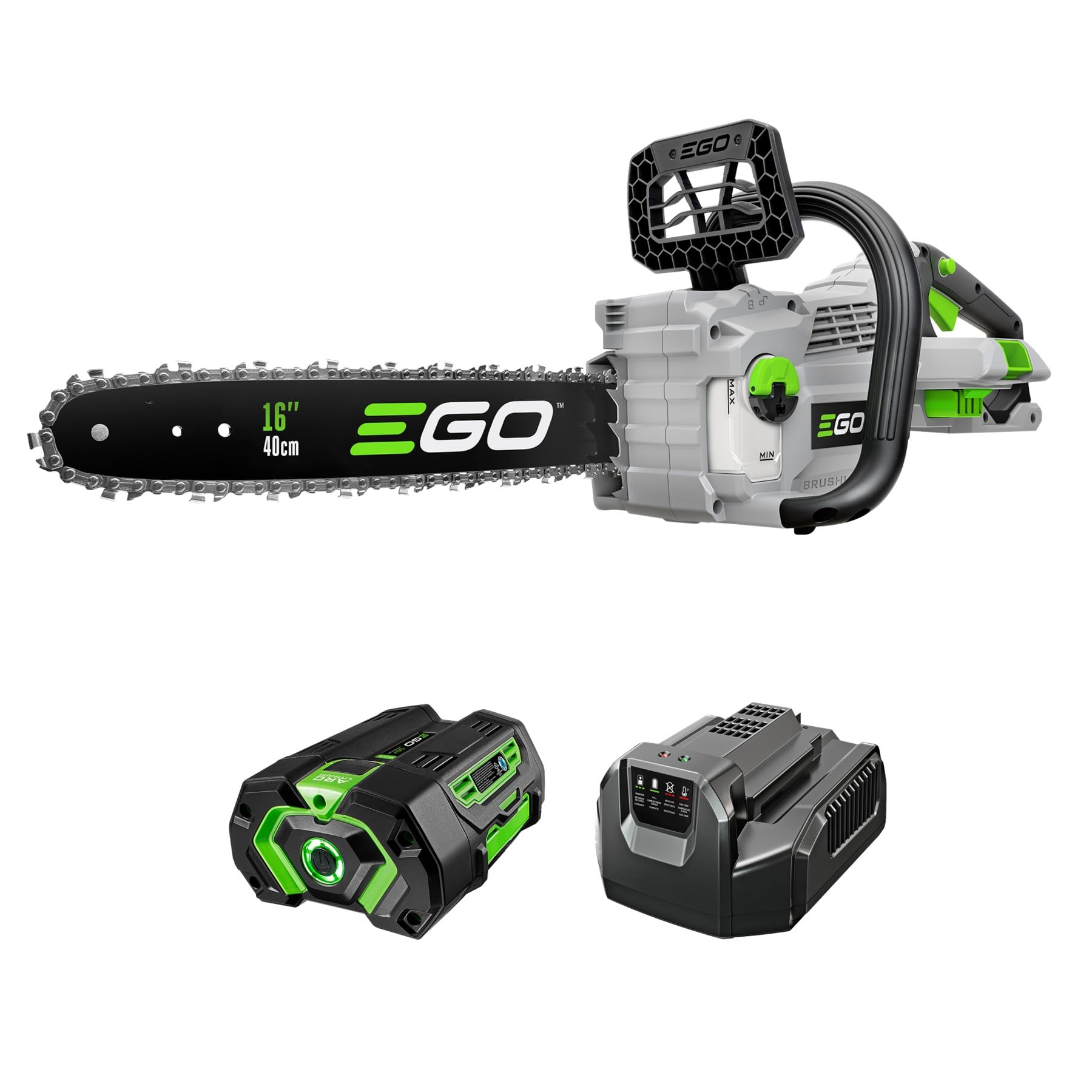
EGO Power+ CS1613 chainsaw
See on AmazonModel comparison
| Model | Price | Rating | Bar length | Weight | Power source | Best for | |
|---|---|---|---|---|---|---|---|
| | Husqvarna 450 Rancher | $499.99 as of 10/31 See on Amazon | ★ 4.5 (550+ ratings) | 20 in | 11.3 lb | Gas powered | Firewood cutters and larger-property owners needing runtime and displacement get a 50.2 cc engine, 20-inch bar and easy starting. |
| | Husqvarna 460 Rancher chainsaw | $649.00 as of 10/31 See on Amazon | ★ 4.5 (550+ ratings) | 24 in | 13.2 lb | Gas powered | Farm and landowners cutting firewood who want a factory-rated 24-inch bar with Smart Start and LowVib comfort. |
| | EGO Power+ CS1613 chainsaw | $299.00 as of 10/31 See on Amazon | ★ 4.7 (1,000+ ratings) | 16 in | 20.9 lb | not stated | Homeowners wanting one saw for limbing, cleanup and occasional small trees get a 16-inch bar, 40 cc gas equivalent and included 4.0 Ah battery. |
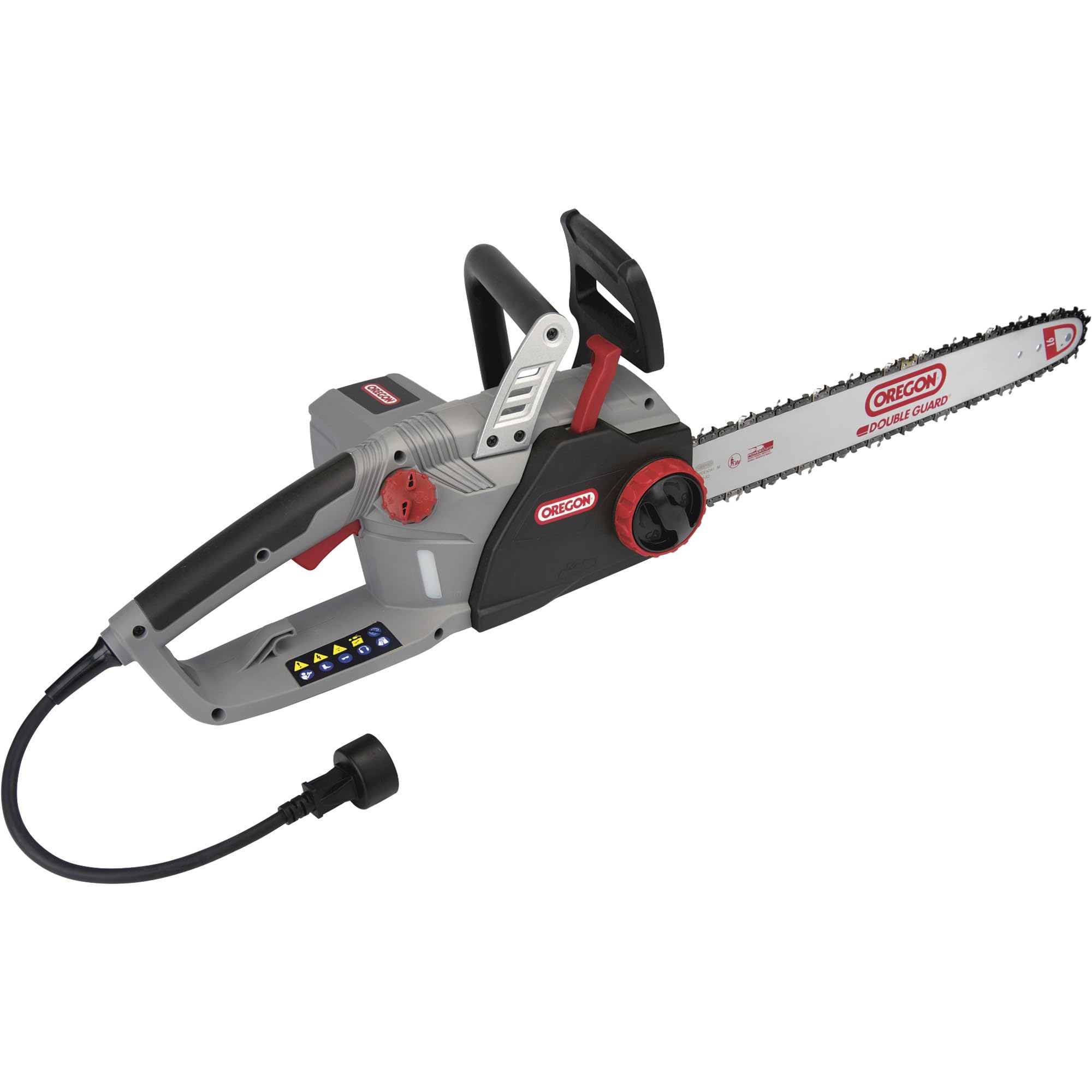 | Oregon CS1500 chainsaw | $133.87 as of 10/31 See on Amazon | ★ 4.4 (9,400+ ratings) | 18 in | 12.6 lb | Corded electric | Homeowners bucking firewood or dropping limbs near an outlet get the strongest motor here, an 18-inch bar and on-saw sharpening in 3 seconds. |
 | Greenworks 20312 40V 16 in. chainsaw | $249.99 as of 10/31 See on Amazon | ★ 4.4 (6,100+ ratings) | 16 in | 10.4 lb | Battery powered | Budget-conscious battery buyers wanting a 16-inch bar get a brushless motor, Oregon bar and chain and a 4.0 Ah pack. |
How bar length changes what a firewood saw can cut
A bar cuts rounds up to roughly its own length from one side, and comfortably up to about 2 inches less than its bar length in a single pass. A longer round is finished from the other side: cut partway, roll the log, and come back through.
Why 16 to 20 inches covers most firewood work
Most homeowner firewood rounds run 10 to 16 inches across. A 16-inch bar handles the bulk of that in one pass, an 18-inch bar is the common middle ground, and a 20-inch bar is for larger rounds and bigger wood. Buying a bar for the biggest log on the property rather than the wood you cut most means carrying extra length and weight through every other cut.
The usable cutting length caveat
The advertised bar length is not all cutting length. The sprocket nose and the mount take up part of it, so the effective cut is shorter than the number on the box. A bar listed at 18 inches does not give you 18 inches of chain in the wood, which is why the 2-inch margin matters.
When a longer bar actually helps with bucking
A longer bar earns its keep on large-diameter rounds cut from one side without repositioning, on a big pile where you would otherwise bend over every cut, and on a log lying against a bank or buried in a stack where you need reach. The cost is real: more weight out front, more chain to drive and sharpen, and a saw that needs more power to pull it.
Bar length also has to stay within the saw's rated bar range. The manual lists the minimum and maximum the powerhead is built for, and fitting a longer bar than the saw is rated for loads the engine and clutch.
Matching engine power to the wood you burn
Displacement and power output set whether the saw holds chain speed in the cut. Chain speed is what actually severs wood: when a saw bogs, chain speed has dropped, the cut slows, and the bar and chain heat up.
The engine class that pulls each bar
The practical pairing runs roughly 38 to 45 cc for a 16-inch bar, 45 to 50 cc for 18 inches, 50 to 55 cc for 20 inches, and 55 to 60 cc for 20 to 24 inches. These are the combinations that keep chain speed up in hardwood.
Why an underpowered saw with a long bar bogs down
Put a long bar on a small engine and the saw is asked to drive more chain through more wood than it can pull. It loses speed, the cut wanders off line, and the operator starts pushing the saw into the wood. That push is where kickback risk and extra wear come from. A smaller saw with a well-matched bar cuts faster and straighter than a big bar on a small engine.
Hardwood, softwood and green wood
Hardwood rounds such as oak, hickory and maple demand more from the saw than softwood. Green wood cuts differently from seasoned wood, too: a saw that is adequate for softwood limbwood can be marginal in dry oak rounds of the same diameter.
Where the consumer class ends
Gas saws up to about 62 cc are classed as consumer or homeowner saws; above that is professional territory. Most firewood cutting for a household sits comfortably in the consumer class, and the saws that fit it are built for exactly that work.
Why balance and weight matter more when bucking firewood
Firewood work is repetitive crosscutting at sustained load: hundreds of cuts per cord, with the saw held, aimed and recovered over and over. Weight compounds with every round. Two or three pounds is invisible on a spec sheet and obvious by the fourth hour.
Balance beats a light powerhead
A saw that is light in the powerhead but carries a long bar feels nose-heavy and tires the wrists and forearms. A well-balanced saw, with the bar matched to the powerhead, steers and recovers more easily between cuts, which is most of what bucking actually is.
The limbing contrast
Limbing a felled tree means holding the saw at odd angles and reaching out. There, a lighter saw with a shorter bar is a real advantage, and a heavy long-bar saw becomes a liability. If your work is mostly limbwood and small rounds, weight matters more than reach.
Vibration over a long session
Vibration damping belongs in the same fatigue picture. Long sessions of sustained cutting expose the hands and arms to vibration, and anti-vibration systems reduce how quickly you tire and how much you feel it the next day.
A saw that feels light in the shop can wear you out over a cord of rounds. Judge weight against the hours you will actually run it, not the lift off the shelf.
Choosing a bar and chain setup for firewood cutting
A standard laminated bar with a sprocket nose is the norm for firewood saws. A shorter bar suits limbing, a longer one suits bucking big rounds, and the same saw can carry either within its rated range.
Pitch and gauge in plain terms
Pitch is the distance between drive links, which is the size of the chain. Gauge is the thickness of the drive link that rides in the bar groove. The bar, chain and drive sprocket must match, and a saw is built around one pitch and gauge combination. Lower-profile, smaller-pitch chain is lighter and easier on smaller engines; standard-pitch chain is stronger and faster on bigger saws.
Which chain type for firewood
Semi-chisel chain holds an edge longer in dirty, frozen or gritty wood and is the sensible default for firewood. Full-chisel is faster in clean wood but dulls quicker on dirty rounds.
Spare chains for a day's work
A sharp chain is the single biggest factor in cutting speed. Swapping a chain takes a minute where sharpening takes longer, so carry at least one or two sharp spares for a full day and sharpen the dulled ones at the bench.
The sharpness signal is easy to read: chips instead of dust, the saw pulling to one side, or needing to push means it is time to swap or sharpen.
What a firewood saw needs that a general-purpose saw does not
Firewood work is many short cuts in sequence, not one long felling cut. That changes which features earn their place on the saw.
Easy starting, cut after cut
A saw that starts reliably cold and hot, over and over, is worth more than a fraction of a horsepower. On a felling saw the engine runs all day; on a firewood saw it stops and starts between rounds, and every hard start costs you time and patience.
Air filtration for dusty work
Bucking dry firewood and working near the ground throws dust and chips. A good filtration system, and one that is easy to clean, keeps the engine breathing and cuts down on maintenance between sessions.
Fuel capacity for a tank's worth of rounds
A firewood saw runs near-continuously, so tank size and fuel economy decide how often you stop. The oil tank typically empties about as fast as the fuel tank, so both get topped at each stop. A saw that oils reliably and holds enough oil for a tank of fuel keeps you cutting instead of refilling.
Cooling and durability under sustained load
Continuous cutting at near-full throttle is harder on a saw than intermittent use. Cooling and build quality matter for a firewood saw in a way they do not for a saw that makes a few cuts and goes back on the shelf.
Our picks by budget
The Oregon CS1500 is our budget pick because it gives unlimited runtime from an outlet, instant starts, no fuel mixing and a self-sharpening chain, which covers yard firewood work at the lowest outlay. The trade-off is the cord: you work within reach of power.
The EGO Power+ CS1613 is our mid-range pick because it brings power equivalent to a 40 cc gas saw, a 16-inch bar, tool-free tensioning, automatic oiling and bucking spikes without fuel or fumes. What you pay for is the battery platform and the runtime each charge gives you.
The Husqvarna 460 Rancher is our premium pick because 60.3 cc and 3.6 hp pull a 24-inch bar through large hardwood rounds, with Smart Start, LowVib, Air Injection filtration and an adjustable automatic oil pump. It is built for demanding cutting and firewood preparation at volume.
Budget
Mid-range
High-end
Which chainsaw for which firewood cutter
Annual cords, round diameter and distance from an outlet decide more about the right saw than brand loyalty does.
Small volume near an outlet
You buck a modest amount of firewood in the yard or near the house and want instant starts, no fuel mixing and a chain that sharpens on the saw. The cord is the limit, so the wood has to sit within reach of an outlet.
Light volume, no fuel
You cut limbwood and small to mid rounds around the property and want a gas-free, low-noise saw that is easy to carry. The 16-inch bar and 10.4 lb weight suit that work.
A cord or two, convenience first
You want gas-free, low-noise operation with a 16-inch bar for typical rounds and the flexibility of a battery platform. Suited to limbing and bucking smaller to mid rounds, with spare batteries for volume.
Several cords of mixed hardwood
You cut several cords, work away from an outlet, and want a 50.2 cc gas saw with a 20-inch bar, easy starting and air filtration that shrugs off dust. A workhorse for firewood cutting and yard cleanups.
Heaviest volume, largest rounds
You prepare firewood at volume, cut large-diameter rounds, and want a 60.3 cc saw with a 24-inch bar and 3.6 hp for demanding cutting jobs. The weight and fuel mixing are the price of that capacity.
Our verdict on the best chainsaw for firewood
Measure the rounds you cut most, pick a bar about 2 inches longer within the saw's rated range, and match engine class to that bar. That one sequence settles most of the decision before you look at a single model.
The Husqvarna 450 Rancher is the balanced gas choice for most firewood cutters: 50.2 cc and 3.2 hp on a 20-inch bar, easy starting and filtration that handles dust. Step up to the Husqvarna 460 Rancher when volume and round size demand a 24-inch bar and 60.3 cc. The EGO Power+ CS1613 suits the convenience-first, lower-volume buyer, and the Oregon CS1500 the outlet-bound buyer watching the outlay.
The rule that prevents most bad buys: do not put a long bar on an underpowered saw, and do not buy more saw than your annual volume justifies.
Detailed model analysis
Firewood saws are judged on how they hold chain speed through hardwood rounds and how they feel by the fourth hour, not on peak horsepower.
Husqvarna 450 Rancher
The Husqvarna 450 Rancher pairs a 50.2 cc, 3.2 hp 2-cycle X-Torq engine with a 20-inch bar. That is the pairing most firewood cutters want for bucking a cord of rounds.
Gas power means no outlet and no battery to run down mid-pile. The saw weighs 11.3 lb.
Smart Start and air purge make starting easier, so you spend your time cutting instead of yanking a cord. LowVib vibration reduction and an ergonomic rear handle take some strain out of a long day.
Air Injection spins dust and debris out before it reaches the air filter. That means fewer filter cleanings when sawdust is flying all afternoon.
You mix fuel with Husqvarna 2-stroke lubricant at 50:1, and fuel is not included. The warranty is 2 years, or 5 years if you buy 96 fl oz of pre-mixed fuel with select handheld products.
It suits firewood cutters and owners of larger properties who want a 20-inch gas saw that starts easily and keeps going without an outlet or a battery.
- Brand: Husqvarna
- Engine displacement: 50.2 cc
- Power: 3.2 hp
- Bar length: 20 in
- Power source: Gas powered
- Weight: 11.3 lb
Husqvarna 460 Rancher chainsaw
We would look at this saw when your firewood rounds are big. Its 60.3 cc, 3.6 hp 2-cycle X-Torq engine pulls a 24-inch bar, which cuts wide logs in one pass.
Smart Start eases starting. LowVib vibration reduction and an ergonomic front handle add comfort over a full day, and Air Injection removes larger dust and debris before the air filter.
A side-mounted chain tensioning system keeps slack adjustments within easy reach. An automatic adjustable oil pump oils the bar and chain while you cut.
The box holds the powerhead, bar, chain, a 2.6 oz bottle of 50:1 fuel mix, fuel cap, scrench and quick start guide. It is the only saw here that includes fuel mix.
The price of that size is weight. At 13.2 lb, it is heavier than the Husqvarna 450 Rancher and the Greenworks 20312 40V 16 in. chainsaw, which weighs 10.4 lb.
It suits farm and land owners who cut a lot of firewood and want a bigger engine than the Husqvarna 450 Rancher.
- Brand: Husqvarna
- Engine displacement: 60.3 cc
- Power: 3.6 hp
- Bar length: 24 in
- Weight: 13.2 lb
- Power source: Gas powered
EGO Power+ CS1613 chainsaw
The EGO Power+ CS1613 is a cordless 16-inch saw for cutting firewood without mixing fuel. Its brushless motor delivers power equivalent to a 40 cc gas chainsaw.
The included 56V, 4.0 Ah battery gives up to 220 cuts on a 4x4. Any EGO Power+ 56V ARC Lithium battery fits, so you can add spares for a bigger pile.
Tool-free chain tensioning uses independent dials, so you adjust the bar and chain without a wrench. The low-profile dials also let it cut flush to the ground.
An automatic oiling system lubricates the chain as you cut. Metal bucking spikes help you grip the log, and a kickback brake with a brake position indicator adds control. The chain moves at about 65.6 ft/s (20 m/s).
The main limit is weight: 20.9 lb. It also runs only on an EGO Power+ 56V ARC Lithium battery, and one 4.0 Ah battery comes in the box.
It suits homeowners who want one fuel-free saw for limbing, cleanup and occasional small trees.
- Brand: Ego Power+
- Bar length: 16 in
- Voltage: 56 V
- Battery capacity: 4.0 Ah
- Chain speed: 20 m/s
- Weight: 20.9 lb
Oregon CS1500 chainsaw
The Oregon CS1500 is a corded electric saw with an 18-inch bar. It draws 15 amps and starts instantly, with no gas-oil mixing, no pull-starting and no fuel to store.
Its standout feature is on-saw sharpening. Pull a lever and the self-sharpening PowerSharp chain is sharpened in 3 seconds, so a dull chain does not end your session mid-pile.
Tool-less tensioning lets you tighten a ring on the side cover with no wrench. An automatic oiler feeds the bar and chain, and the low kickback design adds a margin of safety.
It weighs 12.6 lb, less than the Husqvarna 460 Rancher at 13.2 lb. It also carries a 2-year warranty.
The cord is the limit. You need a power outlet, so the saw works only as far as the cord reaches, and its 18-inch bar is shorter than on both Husqvarna Ranchers.
It suits homeowners bucking firewood or dropping limbs near an outlet who want an 18-inch bar and a chain they can sharpen on the saw.
- Brand: Oregon
- Bar length: 18 in
- Power source: Corded electric
- Current: 15 A
- Weight: 12.6 lb
- Overall size: 37.5 in long, 18 in wide and 10.5 in high
Greenworks 20312 40V 16 in. chainsaw
The Greenworks 20312 is a cordless saw with a brushless motor, a 40V, 4.0 Ah lithium-ion battery and a charger in the box. It lists firewood cutting, tree felling and storm cleanup as intended uses.
The brushless motor is claimed to give up to 80% longer life and up to 30% more torque. You also get no pull cord and no gas and oil mixing.
The 16-inch bar and chain are made by Oregon. A safety chain brake and metal bucking spikes help you stay in control of the log, and an automatic oiler lubricates the chain.
At 10.4 lb, it helps on long days of limbing and cutting rounds. The battery belongs to the G-MAX 40V system, compatible with 14 different lawn tools. The manufacturer warranty runs 3 years.
The main limit is the 16-inch bar, so wide rounds take more than one pass.
We find it suits budget-minded battery buyers who want a light saw for firewood, limbing and storm cleanup.
- Brand: Greenworks
- Bar length: 16 in
- Voltage: 40 V
- Battery capacity: 4.0 Ah
- Power source: Battery powered
- Weight: 10.4 lb
Frequently asked questions
Bar length, engine class and chain type answer most of what a firewood cutter needs to settle before buying.
What size chainsaw do I need for firewood?
Measure the rounds you cut most and pick a bar about 2 inches longer, within the saw's rated range. Then match engine class to that bar: roughly 38 to 45 cc for 16 inches, 45 to 50 cc for 18, and 50 to 55 cc for 20. Stay within the minimum and maximum bar length the manual lists for the powerhead.
Is a battery chainsaw good enough for firewood?
Yes, for light to moderate volume. Modern battery saws cut comparably to many 18 to 20 inch gas saws. The limits are runtime per charge and cold weather, so carry spare batteries when you plan a full day of bucking.
Gas vs battery for firewood, which should I buy?
Gas for volume, cold weather and work away from power. Battery for convenience, low noise, no fuel mixing and lighter use near home. Match the choice to your annual cords and how far the wood sits from an outlet.
What chain type is best for firewood?
Semi-chisel is the safer default when you cannot be sure the wood is clean, and full-chisel rewards you with faster cuts only if you can keep the rounds free of grit.
How much fuel does it take to cut a cord of firewood?
It varies with saw size, wood and technique. A 45 to 55 cc saw uses on the order of a fraction of a gallon per cord, and a cord is well over a hundred crosscuts at 16-inch lengths. Plan fuel and bar oil for the session, and top both at each stop.