Best 36-Inch Chainsaw 2026: Big-Displacement Saws for Milling and Oversized Logs
When you buy through the Amazon links on this page, we may earn a commission at no extra cost to you. Learn more
Last updated October 31, 2026
The best 36-inch chainsaw for milling and oversized logs is the Farmmac F070W: a 105 cc two-cycle saw with a 36-inch alloy solid bar, built for milling work, and the biggest displacement here short of the premium pick. A 36-inch bar is a professional gas saw class, and no corded or battery 36-inch saw exists on the US market.
For sustained slab cutting and hardwood, the Neo-Tec NH8120 brings 120 cc, 8.4 hp and an adjustable oil pump. If you cut firewood and only rarely face a big log, a shorter bar is the right tool.
Our 3 picks
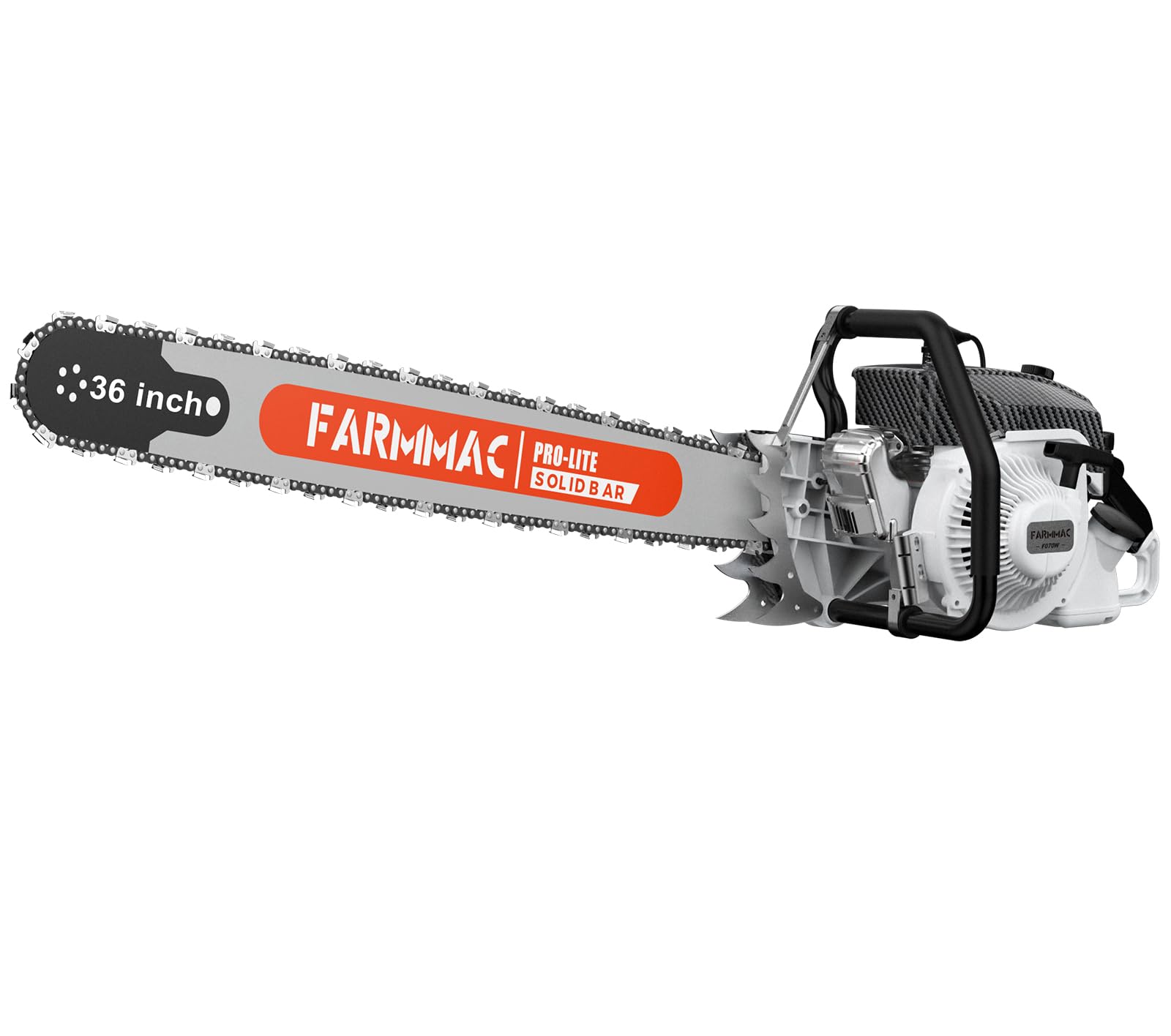
FARMMAC F070W
See on Amazon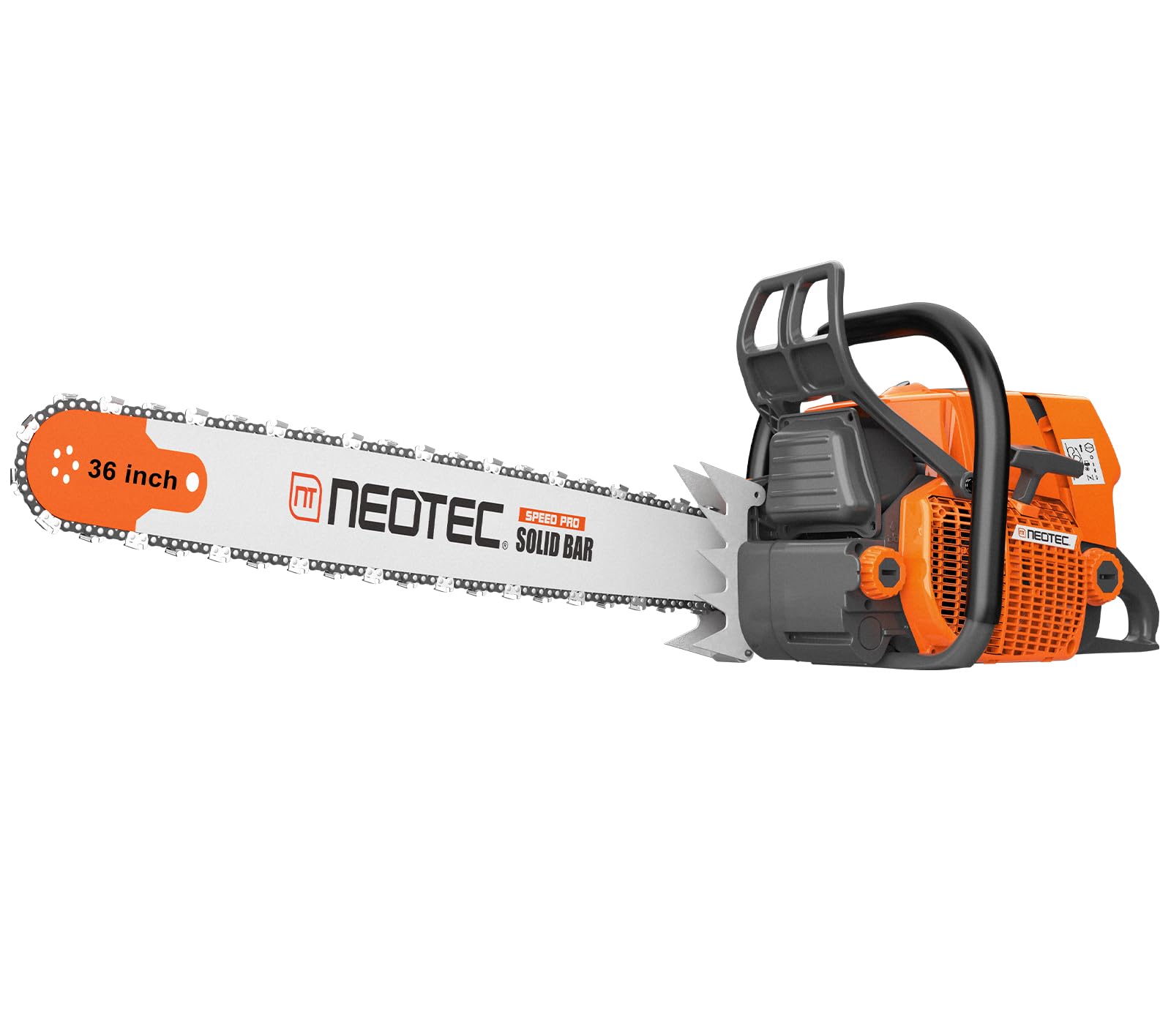
NEO-TEC NS892V1
See on Amazon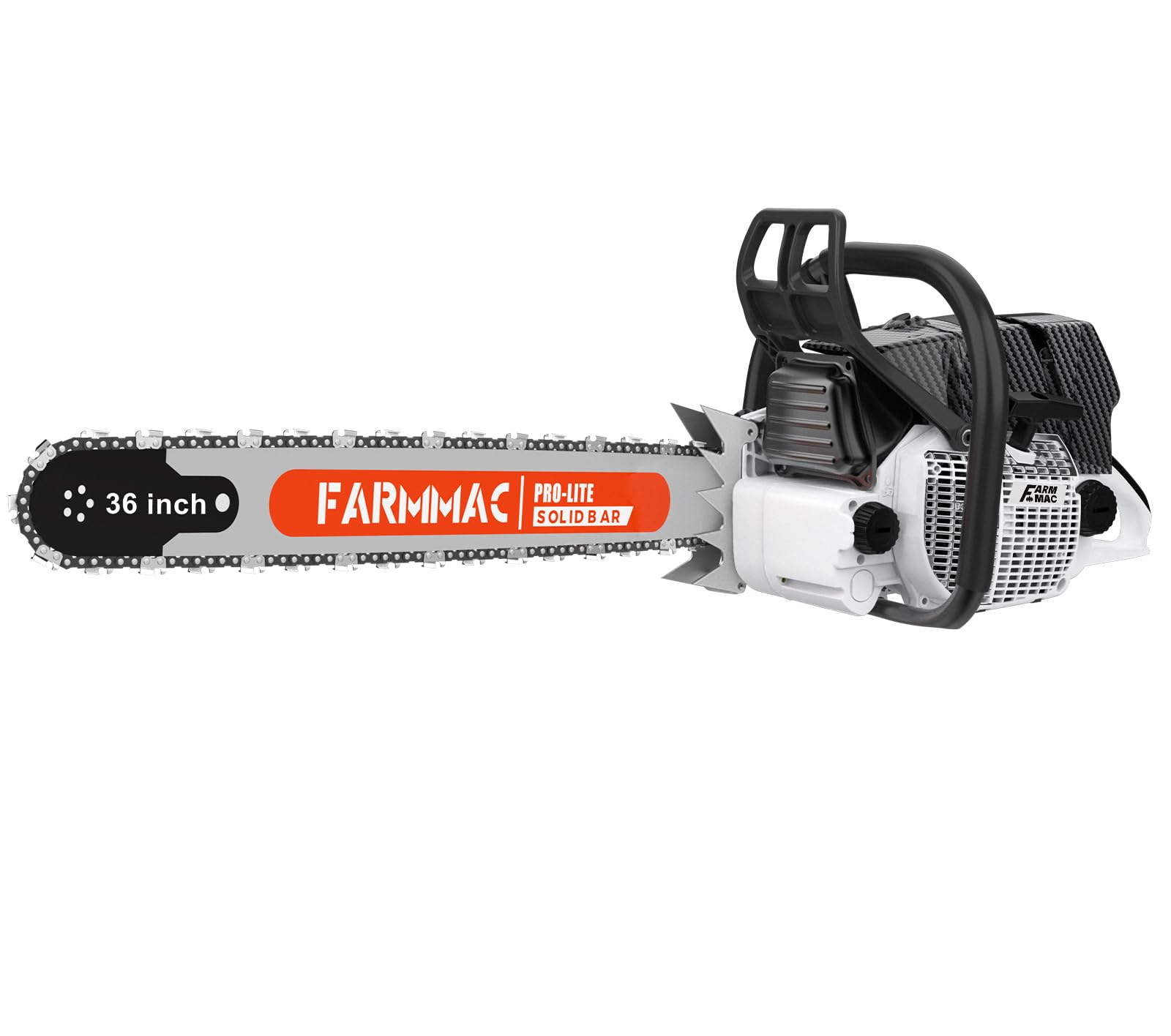
FARMMAC F660VW chainsaw
See on AmazonModel comparison
| Model | Price | Rating | Engine displacement | Power | Bar length | Best for | |
|---|---|---|---|---|---|---|---|
| | FARMMAC F070W | $409.99 as of 10/31 See on Amazon | ★ 4.3 (90+ ratings) | 105 cc | 6.5 hp | 36 in | Milling-focused buyers who need a 105cc saw with a 36-inch alloy solid bar for sustained big-log cuts. |
| | NEO-TEC NS892V1 | $429.99 as of 10/31 See on Amazon | ★ 4.3 (50+ ratings) | 92 cc | 7 hp | 36 in | Storm-cleanup and heavy-forestry buyers who want a 92cc saw with a fully specified 36-inch full-chisel chain setup. |
| | FARMMAC F660VW chainsaw | $409.99 as of 10/31 See on Amazon | ★ 4.1 (100+ ratings) | 92 cc | 7 hp | 36 in | All-day forestry and farm users wanting a 92cc 36-inch saw whose 18.18-pound powerhead stays manageable. |
 | Holzfforma G660 chainsaw | $430.00 as of 10/31 See on Amazon | ★ 4.1 (50+ ratings) | 92 cc | 5.2 kW | not stated | Conventional-setup buyers who want a 92cc 36-inch sprocket-nose saw with simple, predictable chain replacement. |
 | NEO-TEC NH8120 chainsaw | $659.99 as of 10/31 See on Amazon | ★ 5.0 (11 ratings) | 120 cc | not stated | 36 in | Professional loggers and sawmill operators needing the largest displacement here, 120cc, with an adjustable oil pump. |
What a 36-inch bar actually cuts
Bar length is a called length: it is measured from the front of the saw body to the bar tip and rounded up to an even inch. The usable cutting length is roughly 2 inches less, so a 36-inch bar cuts about 34 inches in one pass. The overall bar, tip to tail, runs 4 to 6 inches longer than the called length.
That means a 36-inch bar fells or mills logs up to roughly 34 inches across in a single pass. Anything bigger needs a double cut or a longer bar.
When 36 inches is the right size
Logs in the low 30s in diameter are the sweet spot. The safe practice is a bar a little longer than the tree you are cutting, so the tip stays clear of the ground, but not so long that the tip is likely to strike it. For milling, 36 inches gives you the widest slab you can pull from a bar you can still handle.
When it is too short or needlessly long
Timber over about 34 inches, or slabs wider than a 36-inch bar can produce, call for a longer bar and more displacement together. Under about 24 inches of cut, a 36-inch bar is dead weight: a shorter bar is lighter, safer and easier on the saw.
Why 36-inch saws need big displacement
A 36-inch bar is a long load. There is more chain to drive, more friction in the bar groove and more wood engaged on every pass. The engine has to hold chain speed under that load, or the cut bogs, the chain stalls and the bar and chain overheat.
About 70 cc is the bare minimum to run a 36-inch bar at all. 90 cc and up is the realistic range, and 110 to 120 cc is what hardwoods and sustained milling demand. Bar makers publish power-to-length charts in the same ballpark, and saw makers cap each model at a maximum recommended bar length.
Why a smaller engine on the same bar fails
A small engine on a long bar loses chain speed the moment the cut loads up. It runs hotter, wears the bar and chain faster, and pushes the operator to lean on the saw, which raises kickback risk. A saw rated to a shorter maximum bar should not be stretched to 36 inches.
Hardwood changes the number
Dense wood such as oak or hickory needs more torque from the same bar. Displacement that feels adequate in softwood turns marginal in hardwood, so size the saw for the hardest wood you will cut. Torque and chain speed both count: a torquey saw holds rpm in the cut, a high-strung small-displacement saw does not.
What a 36-inch bar asks of your oiler and chain across its whole length
A 36-inch bar has far more chain and bar groove to lubricate than a short bar, and the oil has to reach the tip. A long bar needs a higher-output oil pump, ideally adjustable, so you can turn up the flow for sustained cutting. For milling, an auxiliary oiler is a common and sensible addition. Under-oiling a long bar is a leading cause of bar and chain wear.
The chain spec has to match
A 36-inch bar takes a chain defined by pitch, gauge and drive-link count. The two common 36-inch specs are 3/8-inch pitch, .063-inch gauge, 114 drive links and .404-inch pitch, .063-inch gauge, 108 drive links.
Skip chain or full-comp
Full-comp chain is typical up to about 24 inches. On bars 24 inches and longer, skip-tooth chain is commonly used: it clears chips better, drags less and is faster to sharpen, at the cost of being grabby in small cuts and more prone to vibration.
Kickback labels and tension
Green-label chain is low-kickback and yellow-label is not. Long bars carry more kickback energy, so non-professional operators should favor low-kickback chain, a working chain brake and a front hand guard. A longer chain also stretches and moves more, so check and adjust tension more often, and set it cold.
Milling with a 36-inch bar and an Alaskan-style mill
A 36-inch bar on an Alaskan-style mill yields roughly 30 to 32 inches of slab width. The mill's mounting rails eat into usable width, about 1.5 inches per mount, so a two-mount mill loses around 3 inches, plus an allowance for the roller nose.
Milling is far more demanding than crosscutting. The chain runs buried in the wood along its full length, so power, cooling and oiling all need headroom. Displacement that crosscuts comfortably will struggle ripping.
Power for slab cutting
About 70 cc is the minimum for a 36-inch bar in a mill. 90 cc and up is the realistic recommendation for sustained slab cutting, and more for hardwood.
Chain and oiling for milling
Milling needs a ripping chain, whose cutter geometry differs from crosscut chain, and in practice an auxiliary oiler to keep the long bar lubricated through a full-length rip. Sustained full-bar cuts build heat, so the saw should be sized so it is not working at its limit, and expect to manage heat and chain tension through a milling session.
What a Full 36 Inches of Bar Does to the Weight in Your Hands and the Cut in the Log
A 36-inch bar moves the saw's center of gravity forward and out. The powerhead plus a long bar is a heavy, nose-heavy package: expect 16 to 23 lb at the powerhead alone, more with bar, chain and fuel.
Limbing and bucking get more tiring because you hold the weight further from your body. The long nose is more likely to touch something unexpected, which raises kickback exposure, and precise control takes more skill.
Handle configuration
A wrap handle is preferred for felling and milling because it lets you hold the saw in different positions around the cut. A standard handle suits bucking.
Managing fatigue and risk
Balance, anti-vibration and weight distribution matter as much as raw power over a long session, and a slightly less powerful saw that is better balanced is often the better all-day tool. Long-bar work calls for bore-cut skill, wedges, a planned escape route and full protective gear, not a one-swing felling approach.
Our picks by budget
The Farmmac F660VW chainsaw is our budget pick because it delivers the core of a 36-inch saw, 92 cc and 7 hp with a 36-inch bar and a 3/8-inch, .063-inch, 114-drive-link full-chisel chain, without paying for extras.
The Neo-Tec NS892V1 is our mid-range pick because the same 92 cc class comes with a quick-stop chain brake, a safety switch against accidental starting and a documented fuel-mix spec.
The Neo-Tec NH8120 chainsaw is our premium pick because 120 cc and 8.4 hp come with the adjustable oil pump, centrifugal air cleaning and side-mounted tensioner that a long bar and sustained milling call for.
Budget
Mid-range
High-end
Which 36-inch chainsaw for which buyer profile
Milling, felling and storm cleanup put different demands on a 36-inch saw, and the right pick follows the job you do most.
Alaskan-mill and slab cutting
Sustained ripping needs displacement, oiling and cooling headroom. The 8.4 hp is the highest horsepower among the products that give it.
Milling as the main job
A 105 cc saw with a 36-inch alloy solid bar, listed for milling work, keeps the bar stiff through long buried cuts.
Professional felling and bucking
A 92 cc, 7 hp magnesium saw with a quick-stop chain brake and a safety switch against accidental starting covers 30-inch-plus timber with the safety features that matter.
Farm, ranch and land clearing
The 92 cc, 7 hp full-crank saw gives genuine 36-inch capability, and its resin-filled bar is designed for all-day handling.
Storm cleanup of large fallen trees
A 36-inch sprocket-nose bar with a standard 7-tooth sprocket keeps chain replacement simple when you are cutting messy, tensioned wood.
Our verdict on the best 36-inch chainsaws
The Farmmac F070W takes the top spot for milling and oversized logs: 105 cc, a 36-inch alloy solid bar and a sheet that names milling as the job. The Neo-Tec NH8120 is the premium choice, the Neo-Tec NS892V1 is the mid-range pick, the Farmmac F660VW is the budget way into 36-inch capability, and the Holzfforma G660 is the sprocket-nose alternative at 92 cc.
Most readers do not need a 36-inch saw. For firewood and general property work a shorter bar is the right tool, and no battery or corded 36-inch saw exists.
Detailed model analysis
A 36-inch bar only pays off when the saw behind it holds chain speed through a buried cut, so displacement, oiling and chain spec decide the ranking.
FARMMAC F070W
The Farmmac F070W is the saw to pick when you plan to mill slabs or cut logs too wide for a shorter bar.
It runs a 105 cc two-cycle engine rated at 6.5 hp and 4.8 kW. Only the Neo-Tec NH8120 chainsaw, at 120 cc, goes bigger.
The 36-inch alloy solid bar is made for milling, meaning long, steady passes through wide timber.
Output is where it gives ground. The Neo-Tec NH8120 chainsaw lists 8.4 hp if power is your priority, against 6.5 hp here.
It weighs 29.7 lb, which is a lot of saw to carry between logs. It carries a 1-year warranty.
We see it suiting milling-focused buyers who value a larger engine and can live with a lower output rating.
- Brand: Farmmac
- Engine displacement: 105 cc
- Power: 6.5 hp
- Bar length: 36 in
- Weight: 29.7 lb
- Power source: Gas powered
NEO-TEC NS892V1
The Neo-Tec NS892V1 runs a 92 cc full-crank, air-cooled two-cycle engine rated at 5.2 kW (7 HP). Its 36-inch bar uses 3/8 in pitch and 114 drive links, with a full-chisel chain.
A quick-stop chain brake engages during kickback, and a safety switch blocks accidental starting. On a saw with a bar this long, those are real points in its favor.
Magnesium alloy parts keep the build rigid and shed heat, and a rapid air-cooling system works against overheating during long cuts. Parts are compatible with MS660/066 saws, and the power head is designed to fit the G660.
You mix your own fuel: 25:1 with FB grade oil (about 5.1 oz of oil per gallon of gasoline), or 40:1 with FD grade oil (about 3.2 oz per gallon).
It is not CARB certified, so it cannot be sold or shipped to California addresses. It also ships in 2 separate packages.
It suits storm-cleanup and heavy-forestry buyers outside California who want a 92 cc saw.
- Brand: Neo-Tec
- Engine displacement: 92 cc
- Power: 7 hp
- Bar length: 36 in
- Power source: Gas powered
- Engine type: 2-cycle
FARMMAC F660VW chainsaw
The Farmmac F660VW is a 92 cc saw for big timber work: tree felling, bucking, firewood, land clearing and chainsaw milling.
Its 92 cc two-cycle, air-cooled engine is rated at 5.2 kW (7 hp). That trails the 6.2 kW of the Neo-Tec NH8120 chainsaw.
The 36-inch bar takes a full-chisel chain with 3/8 in pitch and 114 drive links. A magnetic induction flywheel ignition is built for easier starting and high-speed cutting. Magnesium alloy parts add impact resistance and heat dissipation.
Milling is on its list of uses, though the Farmmac F070W is the one built specifically for milling work. With a 36-inch bar, it is a long saw, so plan for room to store and carry it.
It is not CARB certified, so it cannot be sold or shipped to California addresses. It also ships in 2 separate packages.
It suits all-day forestry and farm users outside California who want a 92 cc, 36-inch saw for felling, bucking and milling.
- Brand: Farmmac
- Engine displacement: 92 cc
- Power: 7 hp
- Bar length: 36 in
- Power source: Gas powered
- Weight: 18.18 lb
Holzfforma G660 chainsaw
The Holzfforma G660 is a straightforward 92 cc gasoline saw with a 36-inch bar. Its power head is rated at 5.2 kW, and the chain setup stays conventional.
The sprocket-nose bar takes a 114-drive-link, 3/8 in pitch chain, with a standard 7-tooth sprocket. The chain spec matches the Neo-Tec NS892V1 and the Farmmac F660VW, so you can compare replacement chains directly.
It weighs 27 lb, under the 29.7 lb of the Farmmac F070W, which helps when you carry the saw between logs. A tank protective guard and a handle bar complete the features.
The feature list stops there. The Neo-Tec NH8120 adds an adjustable oil pump, a quick release air filter and a low vibration design. For the biggest milling jobs, it and the Farmmac F070W give you more engine.
It lists the same 5.2 kW as the Farmmac F660VW and the Neo-Tec NS892V1. It suits conventional-setup buyers who want a 92 cc, 36-inch saw with simple chain replacement.
- Brand: Holzfforma
- Engine displacement: 92 cc
- Power: 5.2 kW
- Guide bar length: 36 in
- Chain pitch: 3/8 in
- Weight: 27 lb
NEO-TEC NH8120 chainsaw
The Neo-Tec NH8120 chainsaw is the big-engine pick, with 120 cc, the largest displacement of the five.
It lists 8.4 hp and 6.2 kW, the highest figures here. That is more engine than the Farmmac F070W, and its engine makes clearly more power than that saw does.
The two-cycle, air-cooled engine has a fast air cooling system to hold off overheating.
The 36-inch bar is seamless hard steel, paired with a high-temperature quenched alloy chain. The chain runs 3/8 in pitch, 0.063 in gauge and 114 drive links.
An adjustable oil pump gives you control over chain lubrication.
Handling gets attention too: a side-mounted chain tensioner, a quick release cover, a quick release air filter, a centrifugal air cleaning system and a low vibration design.
Magnesium alloy parts are used, and all parts fit the Husqvarna 3120 XP.
It also works with 24 in, 28 in, 36 in and 42 in guide bars. Only the 36-inch setup comes with it, so the other lengths are extra purchases.
It ships in 2 separate packages.
It suits professional loggers and sawmill operators who need the largest displacement here, 120 cc, with an adjustable oil pump.
- Brand: Neo-Tec
- Engine displacement: 120 cc
- Horsepower: 8.4 hp
- Bar length: 36 in
- Power source: Gas powered
- Chain pitch: 3/8 in
Frequently asked questions
Bar length, chain spec and engine size are where most 36-inch chainsaw purchases go wrong.
What size engine do I need to run a 36-inch bar?
About 70 cc is the floor and 90 cc and up is realistic. Dense species such as oak or hickory demand more torque from the same bar, so pick the displacement around the densest timber on your land rather than the easiest.
Can I put a 36-inch bar on a 50 cc or 60 cc saw?
No. The engine cannot hold chain speed under that much chain and wood, so the cut bogs, the saw runs hot, the oiler cannot keep up and the operator ends up pushing harder, which raises kickback risk. Stay within the saw's maximum recommended bar length.
Is a 36-inch bar really 36 inches of cut?
No. The called length is rounded up and measured to the bar tip, so the usable cutting length is about 2 inches shorter, roughly 34 inches in one pass.
What chain do I need for a 36-inch bar?
Either 3/8-inch pitch with .063-inch gauge and 114 drive links, or .404-inch pitch with .063-inch gauge and 108 drive links. Pitch, gauge and drive-link count all have to match the saw and the bar.
Is there a battery or electric 36-inch chainsaw?
No. The largest cordless saws reach about 20 to 22 inches and the largest corded saws about 18 to 20 inches. A saw that pulls 36 inches of bar is gas powered.
Can I mill lumber with a 36-inch bar?
Yes, but the mill rails take their share of the width, so plan on 70 cc minimum, 90 cc and up for sustained cutting, a ripping chain and often an auxiliary oiler.
Will a 36-inch bar overwhelm my saw's oiler?
It can if the pump is small and fixed. Check the pump's output and whether it is adjustable, and add an auxiliary oiler for milling, where the chain stays buried for the whole rip.
Is a 36-inch chainsaw safe for a homeowner?
It is professional-class equipment with high kickback energy. It needs training, protective gear, wedges and bore-cutting skill, and most homeowners are better served by a shorter bar or by renting for a one-off big tree.