Best Corded Chainsaw 2026: Steady Power for Yard Work Close to Home
When you buy through the Amazon links on this page, we may earn a commission at no extra cost to you. Learn more
Last updated October 31, 2026
The Oregon CS1500 is the best corded chainsaw for most homeowners who cut within reach of an outdoor outlet: 15 amps, an 18-inch bar and a PowerSharp chain that sharpens on the saw in about 3 seconds, so steady mains power comes without fuel mixing or battery charging.
If your cutting stays inside a practical extension-cord run, a corded saw gives you instant starts and unlimited runtime for as long as the motor stays cool. The catch is the cord itself, and the pages below cover gauge, reach and cord handling before you buy.
The best corded chainsaws of 2026
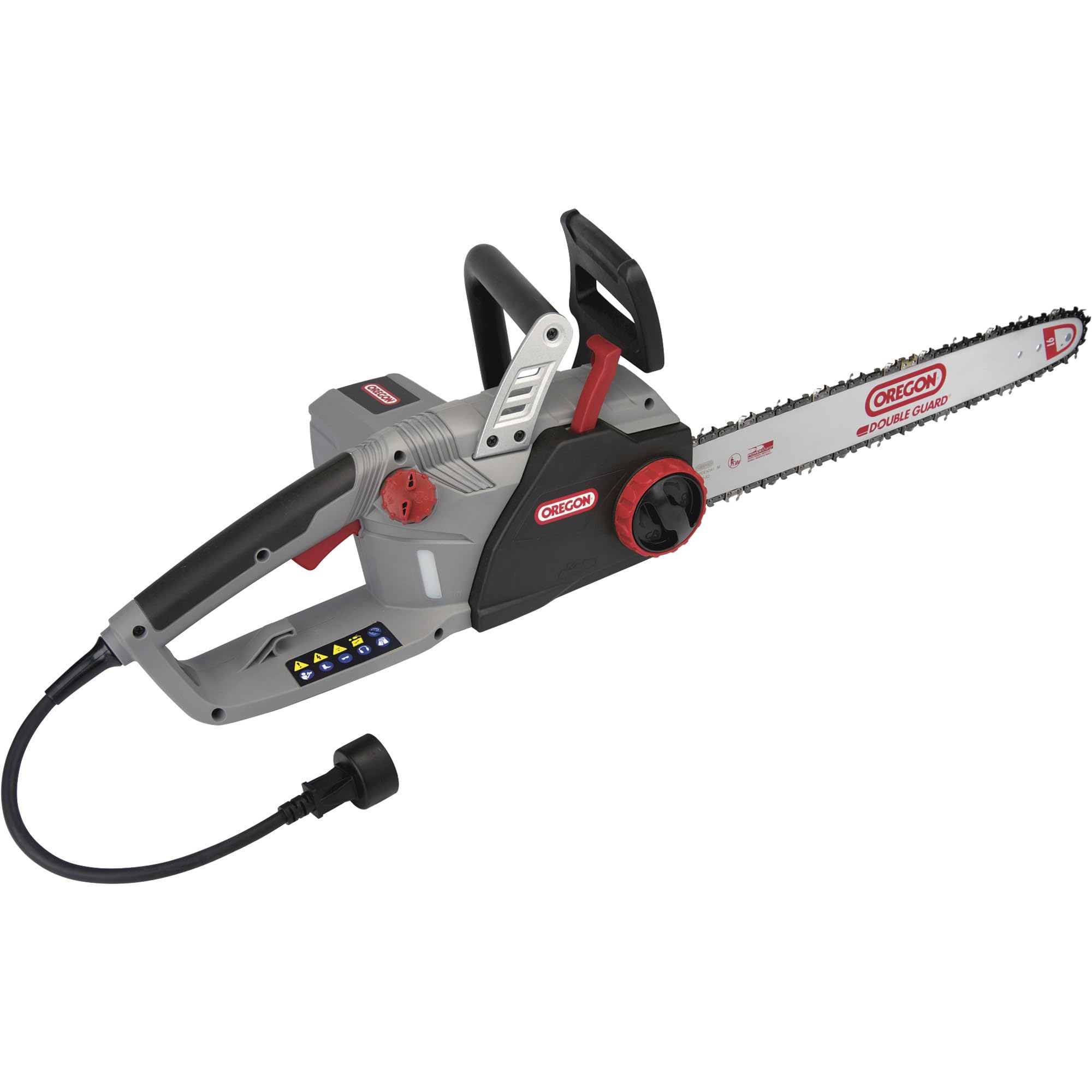
Oregon CS1500 chainsaw
See on Amazon
WEN CP1216 chainsaw
See on Amazon
Craftsman CMECS600 chainsaw
See on AmazonModel comparison
| Model | Price | Rating | Bar length | Power source | Weight | Best for | |
|---|---|---|---|---|---|---|---|
| | Oregon CS1500 chainsaw | $133.87 as of 10/31 See on Amazon | ★ 4.4 (9,400+ ratings) | 18 in | Corded electric | 12.6 lb | Homeowners bucking firewood or dropping limbs near an outlet get the strongest motor here, an 18-inch bar and on-saw sharpening in 3 seconds. |
| | WEN CP1216 chainsaw | $64.99 as of 10/31 See on Amazon | ★ 4.3 (4,300+ ratings) | 16 in | Corded electric | 10 lb | Occasional pruners working within cord reach of an outlet get a 10-pound body, a cable strain-relief notch and a 16-inch chain. |
| | Craftsman CMECS600 chainsaw | $89.00 as of 10/31 See on Amazon | ★ 4.4 (2,500+ ratings) | 16 in | Corded electric | 6.2 lb | Homeowners who cut regularly but tire of holding a heavy saw get the lightest body here at 6.2 pounds with a 16-inch bar. |
 | Black+Decker CS1518 chainsaw | $94.05 as of 10/31 See on Amazon | ★ 4.4 (1,900+ ratings) | 18 in | Corded electric | 12.5 lb | Owners facing bigger limbs, firewood rounds and storm cleanup get an 18-inch Oregon low-kickback bar and chain with a chain brake. |
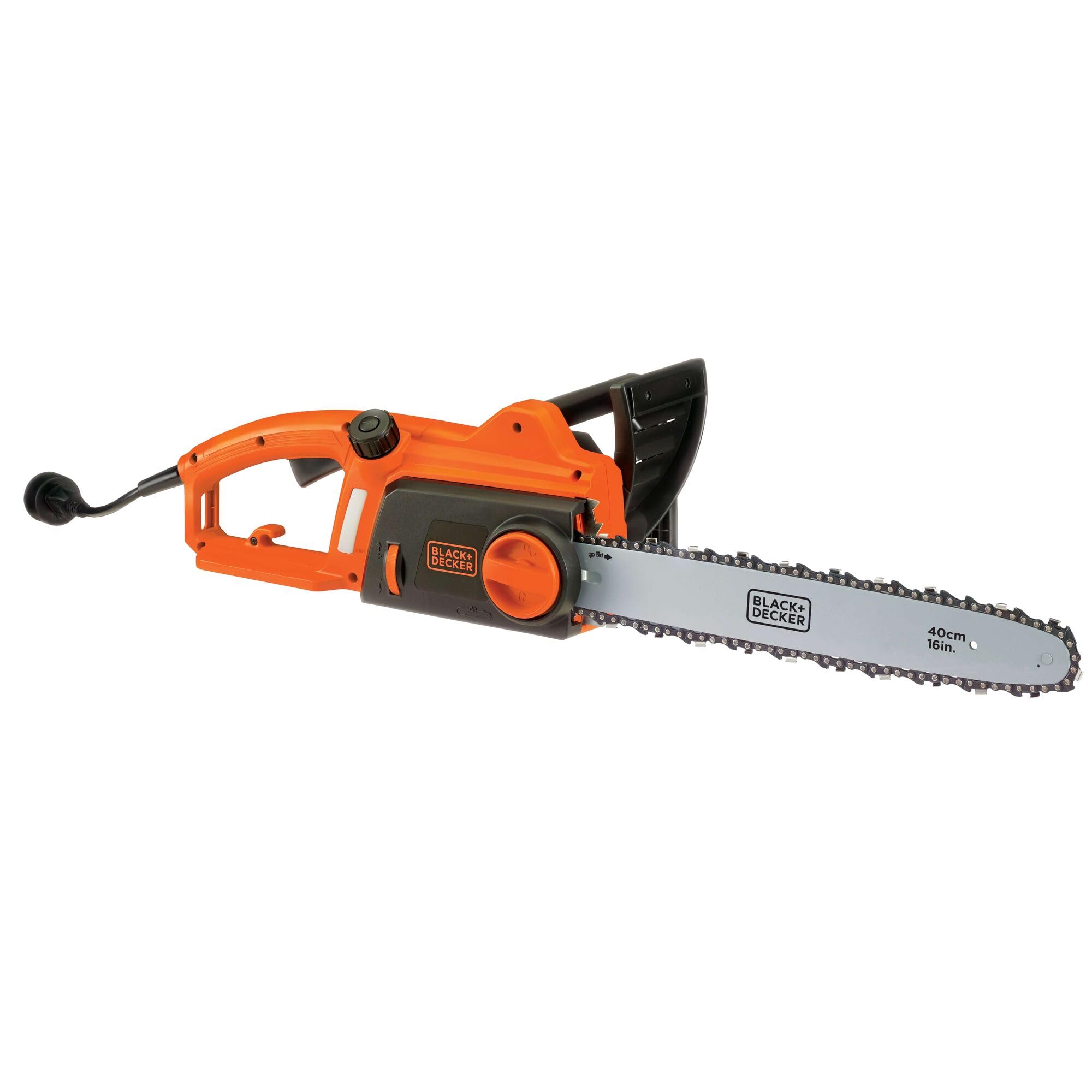 | Black+Decker CS1216 12 Amp 16 in. chainsaw | $89.00 as of 10/31 See on Amazon | ★ 4.4 (650+ ratings) | 16 in | Corded electric | 10 lb | Pruners and light buckers near an outlet get a 10-pound saw with an easy-view oil window and a 16-inch low-kickback bar and chain. |
How a corded chainsaw gets its power from the outlet
Mains current leaves the outlet, travels down the extension cord, and enters the saw through a short pigtail of about a foot. From there it passes a trigger switch and reaches the motor. Most corded saws use a universal motor with carbon brushes; some use a brushless motor, which converts more of the current it draws into usable torque at the chain.
The motor turns a sprocket, and the sprocket drives the chain around the bar. The amperage on the label is the saw's draw, not its output. A 15-amp saw on a 120 V household circuit is pulling close to the full capacity of a standard 15-amp branch circuit, which is about 1,800 watts. That means the outlet, the circuit breaker behind it and anything else plugged into the same circuit set the saw's real ceiling. A saw that shares a circuit with a garage freezer or a shop vac will bog or trip the breaker long before it reaches its rated cut.
Check which circuit the outdoor outlet sits on before you buy a high-amp saw. If it is a 20-amp circuit, a 15-amp saw has room to work. If it is a 15-amp circuit shared with other loads, a 12-amp saw leaves more headroom.
Cord length, gauge and outdoor outlet safety
Voltage drops as current travels through a cord, and the drop grows with length and shrinks with thicker wire. A thin cord on a long run delivers less voltage to the motor, so the saw bogs in the cut and the motor runs hotter. The fix is to match the wire gauge to the run length and the saw's amps.
Matching gauge to run length
For a 14- to 15-amp saw, a 14-gauge cord is fine up to about 50 ft, a 12-gauge cord covers runs up to about 100 ft, and a 10-gauge cord is the choice for the longest runs at high amps. For a 12-amp saw, 14-gauge works to about 50 ft and 12-gauge to about 100 ft. Keep the total run as short as the job allows, and never daisy-chain two cords together: the extra connection adds resistance and heat, and it is a fire risk.
Outdoor-rated cords and GFCI protection
Use a three-wire grounded cord rated for outdoor use, marked with a W for outdoor and a jacket type from the S or SJ family. Plug into a GFCI-protected outlet, either the receptacle itself or a portable GFCI adapter at the cord's end. In damp conditions, use watertight cord connectors so moisture cannot reach the plug blades.
Strain relief at the saw
Loop the cord through the saw's cord retainer or strain-relief notch before you plug it in. That keeps the weight of the cord off the plug and stops the connection from pulling apart or bending the prongs when you move down a log.
Reach limits and where a corded saw stops making sense
Measure the route the cord will actually take, not the straight line from the outlet to the tree. Walk from the outlet around the house, along the fence, past the shrubs and around parked cars to the farthest cut you plan to make, then add a few feet of slack. That number is your working radius.
Cord drag shortens it further. A cord that snags on a downspout or catches under a gate effectively pulls the saw back, and you spend more time freeing the cable than cutting. Plan on a radius that leaves the cord loose enough to move with you.
Once the work sits beyond the practical run length for the saw's amps, a corded saw stops being the right tool. At that point the choices are a battery saw, a gas saw, or moving the work closer to the outlet. Decide this before you buy: a corded saw works well for cutting a lot of wood, but only if the wood is near the house.
Managing the cord while you cut
Route the cord overhead where you can, draping it over a branch or a hook so it hangs clear of the bar. Where overhead routing is not possible, lay the cord along the ground on the side away from the cut and keep it behind you as you work. Never let the cord cross in front of your feet or under the log you are bucking.
Keep the cable clear of the bar, the chips and the fall path. Cut away from the cord, never toward it. A corded saw has no clutch that stops the chain instantly if the cable is severed, so cord discipline is a safety habit, not a convenience.
Move the cord in stages as you work down a log or around a tree: stop the saw, reposition the cord, then start again. Unplug the saw before you adjust the chain, clear chips from the sprocket cover or change the bar oil. Those few seconds of unplugging are the difference between a routine adjustment and an accident.
Duty cycle and overheating on long cutting sessions
Corded electric motors are built for intermittent use. Heat builds inside the motor during sustained bucking, and most saws have thermal protection that cuts power until the motor cools. The outlet never runs out of current, but the motor still needs cool-down periods.
Pace your cuts: cut through a round, then let the saw idle or rest while you roll the next log into place, clear chips and check chain tension. On a long session, alternate a few minutes of cutting with a short break. If the saw slows and smells hot, stop and let it cool rather than pushing through.
Signs of overheating include a motor that loses speed under load, a hot smell from the housing and the thermal cutoff tripping. A sharp chain and correct tension reduce the load on the motor, so keep the chain sharp and the bar oil topped up to keep heat down.
Cold weather, damp conditions and electrical safety
Cold stiffens extension cords, which makes them harder to route and more prone to cracking at the bends. Let a stiff cord warm up indoors before you uncoil it, and inspect the jacket for cracks before plugging in. Cold can also reduce motor efficiency, so expect a little less cutting speed on a freezing morning. Starting is still instant, which is one advantage over a fuel saw that needs choking in the cold.
Do not cut in rain or snow. Keep connections off wet ground, use GFCI protection at the outlet, and use watertight connectors if the ground is damp. Inspect the cord and the saw's pigtail for damage before every use, and replace a cord with a cut or worn jacket rather than taping it.
After cold-weather work, dry the saw and the cord before storing them. Wipe down the bar and chain, empty or top off the oil tank, and coil the cord loosely so it does not kink in storage.
Our picks by budget
The WEN CP1216 is our budget pick because it covers light trimming and occasional limb work at 10 lb, with a strain-relief notch that suits a tethered saw.
The Craftsman CMECS600 is our mid-range pick because it puts a 12-amp motor and a 16-inch bar in the lightest body here at 6.2 lb, for regular homeowner cutting.
The Oregon CS1500 is our premium pick because it brings 15 amps, an 18-inch bar and on-saw sharpening in about 3 seconds, for frequent, heavier cutting.
Budget
Mid-range
High-end
Which corded chainsaw for which buyer
How often you cut, the diameter you cut and how far the work sits from an outlet decide which corded saw fits.
Occasional branches and light trimming
A 12-amp, 16-inch saw at 10 lb with a strain-relief notch covers light limb work close to an outlet without the weight of a bigger saw.
Regular yard and firewood cutting
The lightest saw here at 6.2 lb, with a 12-amp motor and a 16-inch bar for branches and firewood.
Frequent cutting of larger limbs
15 amps, an 18-inch bar and a chain that sharpens on the saw in about 3 seconds suit regular, heavier cutting near the house.
Longer bar for storm debris
An 18-inch Oregon low-kickback bar and chain with a chain brake, aimed at pruning, firewood and storm cleanup.
Watching the oil level mid-cut
A 16-inch low-kickback bar and chain at 10 lb, with an easy-view oil window and tool-free tensioning.
Our verdict on the best corded chainsaws
The Oregon CS1500 is the pick for most people who cut regularly within cord reach: 15 amps, an 18-inch bar and a chain that sharpens on the saw in about 3 seconds make it the most capable saw here. The Craftsman CMECS600 is the lighter mid-range choice at 6.2 lb, and the WEN CP1216 is the budget entry for occasional limb work.
All of it depends on one condition: the work has to sit within a practical extension-cord run of an outdoor outlet. Measure the route before you buy, match the cord gauge to the saw's amps, and a corded saw will cut firewood and storm limbs for years without fuel or battery upkeep.
Detailed model analysis
A corded saw earns its place by cutting steadily near an outlet, so weight, bar length and cord handling matter as much as amps.
Oregon CS1500 chainsaw
The Oregon CS1500 chainsaw suits homeowners who buck firewood or drop limbs near an outlet. It pairs a 15 Amp motor with an 18 in bar, so you need no fuel or batteries.
Its standout is the self-sharpening PowerSharp chain. You pull a lever and the chain sharpens on the saw in 3 seconds, so a quick touch-up mid-job keeps you cutting instead of hunting for a file.
Setup is simple. You tension the chain without tools by tightening the ring on the side cover. An automatic oiler feeds the bar and chain as you cut, and the saw starts instantly with no gas-oil mixing.
It has a low kickback design and a warranty of 2 years. The Black+Decker CS1518 chainsaw shares the 18 in bar and 15 Amp rating, but the sharpening lever sets the Oregon apart.
The tradeoff is weight. At 12.6 lb it is the heaviest of the five, a little ahead of the Black+Decker CS1518 chainsaw at 12.5 lb. It is also corded, so your cutting stays within extension cord reach.
- Brand: Oregon
- Bar length: 18 in
- Power source: Corded electric
- Current: 15 A
- Weight: 12.6 lb
- Overall size: 37.5 in long, 18 in wide and 10.5 in high
WEN CP1216 chainsaw
The WEN CP1216 chainsaw is built for occasional pruning near a plug. It has a 12 amp motor and a 16 in chain, in a body that weighs 10 lb.
Safety gets real attention with a kickback brake meant to stop the chain if a cut kicks back. Among the other saws here, only the Black+Decker CS1518 chainsaw also lists a brake.
Care is easy. The chain tensions without tools, and an automatic oiling system lubricates the guide bar and chain as you cut.
A cable strain relief notch holds your extension cord in place so it does not pull loose. Since you will need a cord to reach most trees, that helps. It runs with no gasoline and no emissions.
It gives up some reach and power to the Oregon CS1500 chainsaw and the Black+Decker CS1518 chainsaw, which both pair 15 Amp with a longer bar. A 2 year warranty backs it.
It suits occasional pruners within cord reach who want a brake on a 10 lb saw.
- Brand: Wen
- Bar length: 16 in
- Chain speed: 44 ft/s
- Power source: Corded electric
- Weight: 10 lb
- Dimensions: 19.7 in long, 7.9 in wide and 10.63 in high
Craftsman CMECS600 chainsaw
The Craftsman CMECS600 chainsaw wins on weight. It comes in at 6.2 lb, against 10 to 12.6 lb for the other four saws.
That matters if you cut often and your arms tire first. A lighter saw is easier to hold up and swing between branches, so you can keep going longer.
It pairs that light body with a 16 in bar and chain, already included, and a 12 Amp corded motor. Being electric, it needs no priming and no fuel to mix.
The limits are plain. The 12 Amp motor sits below the 15 Amp rating of the Oregon CS1500 chainsaw and the Black+Decker CS1518 chainsaw. The 16 in bar is also shorter, so big rounds take more passes.
It stays corded, so your range is the length of your cord. It suits homeowners who cut regularly and stay close to an outlet.
- Brand: Craftsman
- Bar length: 16 in
- Power source: Corded electric
- Current: 12 A
- Weight: 6.2 lb
- Dimensions: 18.63 in long, 11.94 in wide and 8.37 in high
Black+Decker CS1518 chainsaw
The Black+Decker CS1518 chainsaw suits bigger jobs near an outlet. Its 15 Amp motor and 18 in bar handle large limbs, firewood rounds and storm debris.
It matches the Oregon CS1500 chainsaw on bar length and current rating. At 12.5 lb, it is a hair lighter than the Oregon at 12.6 lb.
The chain and bar are Oregon low-kickback parts, made for smoother cuts with less vibration. A chain brake adds another layer of safety if the saw kicks.
Care is simple. You adjust chain tension without tools, and the automatic oiling system keeps the bar and chain lubricated. A scabbard covers the blade between jobs and gives you a safe way to store the saw.
The main limit is that it needs an outlet. It also lacks the on-saw sharpening the Oregon CS1500 chainsaw offers.
- Brand: Black+Decker
- Bar length: 18 in
- Power source: Corded electric
- Weight: 12.5 lb
- Dimensions: 20.69 in long, 13.19 in wide and 10.81 in high
Black+Decker CS1216 12 Amp 16 in. chainsaw
The Black+Decker CS1216 12 Amp 16 in. chainsaw is a straightforward corded saw for pruning and lighter cutting near an outlet. It pairs a 12 Amp motor with a 16 in bar and chain.
Its best feature is the oil window. You see the oil level at a glance and know when to top up before the chain runs dry. An automatic oiling system lubricates as you cut.
The low-kickback bar and chain are made for smooth cutting in different orientations. You tension the chain without tools, so quick adjustments need no extra gear.
It weighs 10 lb, the same as the WEN CP1216 chainsaw. A scabbard covers the blade for storage, and a 2 year limited warranty applies, matching the Oregon CS1500 chainsaw and the WEN CP1216 chainsaw.
The 12 Amp motor and 16 in bar step down from the 15 Amp Oregon CS1500 chainsaw and Black+Decker CS1518 chainsaw, so thick logs take longer. Being corded, it keeps you near an outlet.
It suits pruners and light firewood cutters near an outlet who want a 10 lb saw with an easy-view oil window.
- Brand: Black+Decker
- Bar length: 16 in
- Power source: Corded electric
- Current: 12 A
- Weight: 10 lb
- Dimensions: 19 in long, 9 in wide and 12 in high
Frequently asked questions
Cord gauge, breaker capacity and reach are the questions that decide whether a corded saw suits a yard before the first cut.
Are corded chainsaws powerful enough to cut firewood and hardwood?
Yes, within their bar length. A 15-amp saw with an 18-inch bar cuts firewood rounds and hardwood limbs at a steady pace, and the mains supply does not fade as the tank would. The limit is the bar's reach and the motor's duty cycle, not the power source.
What gauge extension cord do I need, and how long can it be?
Match the gauge to the saw's amps and the run. A 14- to 15-amp saw wants 14-gauge up to about 50 ft, 12-gauge up to about 100 ft, and 10-gauge beyond that. A 12-amp saw draws less current, so it leaves more headroom on a shared 15-amp circuit than a 15-amp model. Never join two cords.
Will a 15 A chainsaw trip my breaker?
It can if the circuit is already loaded. A 15-amp saw leaves almost no headroom on a 15-amp household circuit, so a light, a freezer or a shop vac on the same circuit can push it over. Plug into a circuit with nothing else running, or use a 20-amp circuit if you have one.
Can I use a corded chainsaw in the rain or on wet ground?
No. Water and mains electricity do not mix, and a wet cord or connection is a shock hazard. Wait for dry weather, keep connections off wet ground, and use GFCI protection at the outlet whenever the ground is damp.
How do I keep a corded chainsaw from overheating during a long cutting session?
Work in short bursts rather than one continuous run, since corded motors are built for intermittent use and heat builds inside the housing during sustained bucking. Between rounds, let the saw idle or sit while you set up the next piece, and on a long session trade a few minutes of cutting for a brief pause. If the motor loses speed under load or you catch a hot smell from the housing, shut it down and give it time to cool instead of forcing the cut.
Can a corded chainsaw fell a tree?
It can fell a small tree within its bar length, but the cord limits where you can stand and the fall path has to stay clear of the cable. For anything large, or for felling near structures, hire a professional. A corded saw is better suited to bucking and limbing than to felling.
What bar length should I choose for corded use?
A 16-inch bar covers most homeowner limb and firewood work, and an 18-inch bar handles bigger rounds. Remember that real cut capacity runs about 2 inches less than the bar length, so an 18-inch bar cuts rounds up to roughly 16 inches across.
How far from an outlet can I realistically work?
Plan on the cord's route, not the straight line, and keep the run within the gauge limits for your saw's amps. In practice that means work within about 100 ft of the outlet with a 12-gauge cord on a 15-amp saw, less if the cord has to snake around obstacles.